
Technical Specifications
| Appearance | Milky white liquid |
| Solid content | 38±2% |
| pH value | 6.5–7.5 |
| Viscosity | 14–30s (Ford Cup #4, 25℃) |
| Shelf life | 6 months at 0℃–40℃ |
| Packaging | 50KG plastic drum |
Application
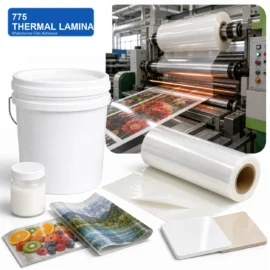
① Coating weight: Dry coating weight should be 1.1–2.1 g/㎡.
② Lamination speed: Ensure the adhesive is completely dried before lamination. With good drying performance, lamination speed is recommended at 140–200 m/min.
③ Drying tunnel temperature: Recommended zone settings: 80–90℃ → 90–105℃ → 85–95℃. Start operation only after reaching the set temperature.
④ Hot roller setting: Hot roller temperature should be 75–85℃. Apply the maximum pressure possible without damaging the material; higher temperature and pressure yield better adhesion.
⑤ Post-processing: After lamination, products can be directly slit or bagged, or aged at 50–60℃ for 1–12 hours before further processing.
Precautions
① Film surface treatment requirements:
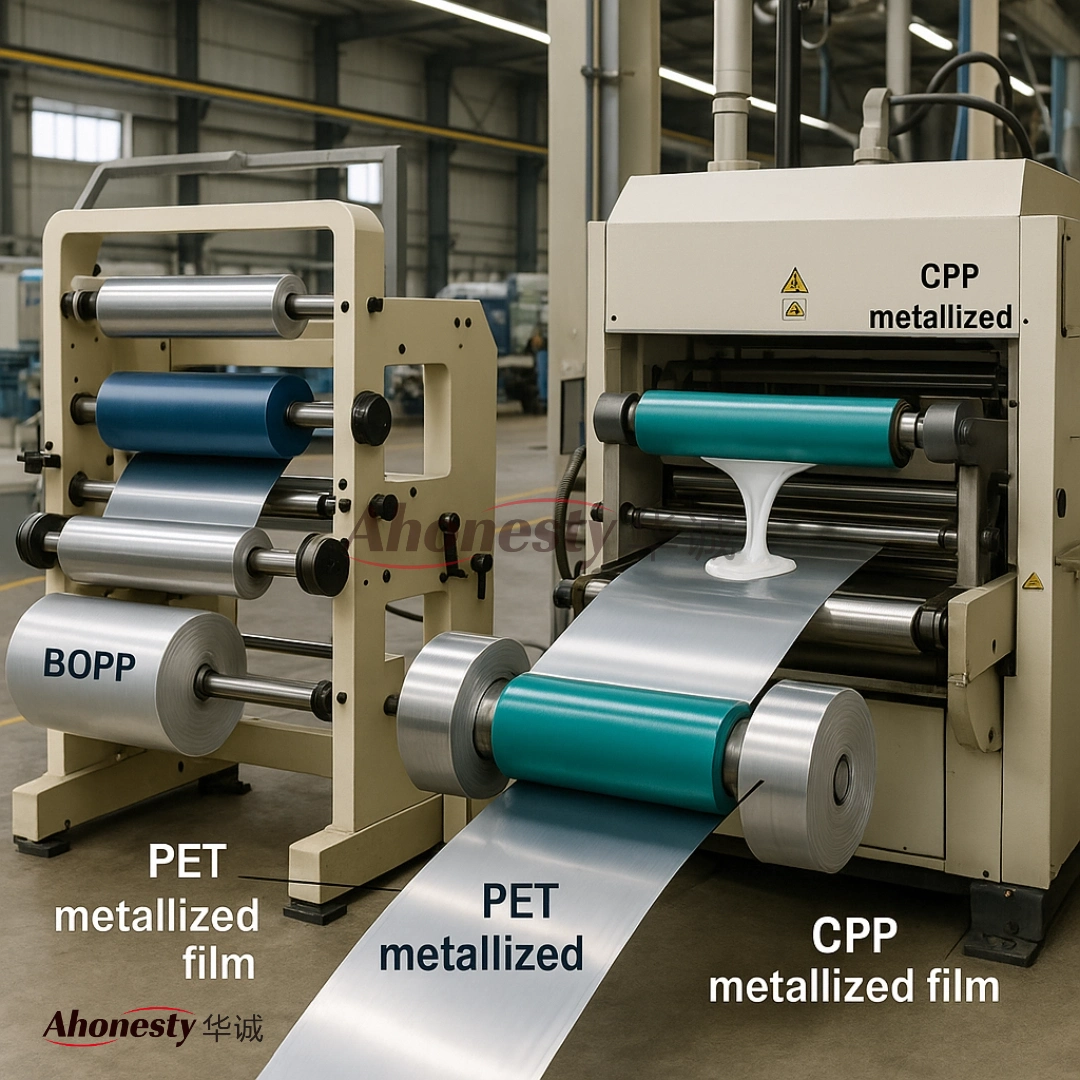
– PE/BOPP/CPP ≥ 38 dynes
– PET ≥ 50 dynes
– PA ≥ 52 dynes
② Control of film additives: Types and amounts of additives affect adhesion strength, especially slip agent content, which must be strictly controlled.
③ Do not mix with other adhesives and avoid contact with solvents such as ethyl acetate or toluene.
④ Equipment cleaning:
– Thoroughly clean the coating roller and adhesive pan before use.
– Use isopropanol for initial cleaning, followed by water rinsing.
– If solvent-based adhesive was previously used, clean sequentially with ethyl acetate → isopropanol (or ethanol) → water.
⑤ Adhesive dilution: Normally no dilution is required. If needed, dilute with isopropanol:water = 1:1 or ethanol:water = 1:1.
⑥ Shutdown handling: Raise the doctor blade and keep the coating roller rotating slowly in the adhesive.
⑦ Trial recommendation: Due to variations in equipment, climate, and substrates, it is recommended to conduct small-scale trials under identical conditions before mass production.
Reviews
There are no reviews yet.